
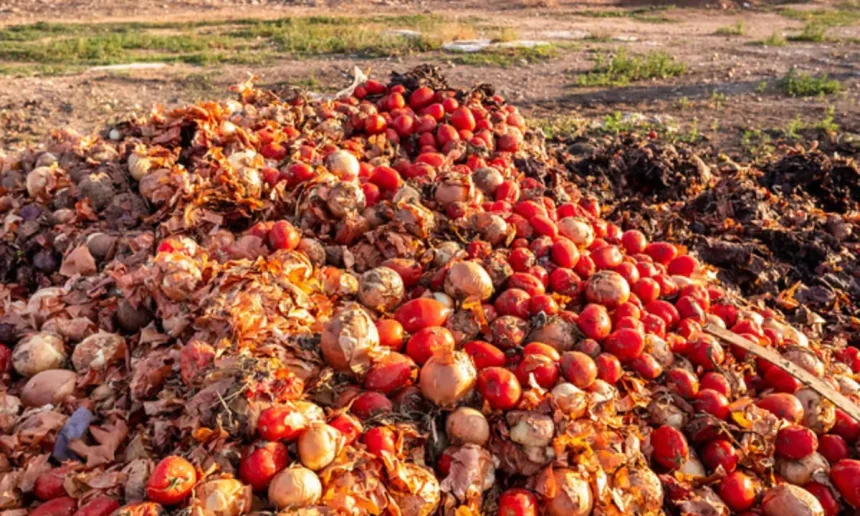
The European Union, in collaboration with the Federal Government and the United Nations Industrial Development Organisation (UNIDO), has raised concern over Nigeria’s growing food waste crisis, calling for urgent and coordinated action to address the challenge.
The partners warned that food waste not only deprives millions of people of needed nutrition but also leads to the loss of critical resources such as water, energy, labour, and capital, thereby worsening climate change and undermining efforts toward a sustainable, zero-waste circular economy.
This call was made on Thursday in Abuja during the commemoration of this year’s International Zero Waste Day, themed “Food waste reduction – minimisation and valorisation.”
Speaking at the event, Deputy Ambassador of the EU Delegation to Nigeria and ECOWAS, Zissimos Vergos, disclosed that Nigeria wastes approximately 38 million tonnes of food annually, the highest figure recorded on the African continent.
He noted that the problem extends beyond Nigeria, revealing that nearly one billion tonnes of food—about one-fifth of all food available to consumers—was wasted globally in 2022.
“This is not just a loss of food; it is a squandering of precious resources, a missed opportunity to combat hunger, and a direct threat to our planet’s health,” Vergos said.
According to him, food loss and waste are significant contributors to environmental degradation, accounting for up to 10 per cent of global greenhouse gas emissions and nearly 40 per cent of methane emissions worldwide.
Vergos, however, commended Nigeria’s ongoing efforts to transition to a circular economy, citing initiatives such as the Nigeria Circular Economy Roadmap, the Inter-ministerial Circular Economy Committee, and plans for a National Plastic Waste Management Regulation.
He outlined key measures needed to tackle the crisis, including investment in rural infrastructure, improved storage systems, and cold-chain logistics to reduce post-harvest losses. He also stressed the importance of promoting value addition by linking farmers to processors and markets, as well as integrating sustainability education into school curricula.
Reaffirming the EU’s commitment, he said the union would continue to support Nigeria through funding, technical cooperation, and policy development.
In his keynote address, the Minister of Environment, Balarabe Lawal, described food waste as a major environmental, economic, and social challenge, noting that it remains a critical issue despite widespread food insecurity in the country.
“Every discarded meal represents wasted resources such as water, energy, labour, and capital, even as many Nigerians continue to face food insecurity. Addressing food waste is central to sustainable development and a healthier future,” he said.
Lawal disclosed that the Federal Ministry of Environment has included projects aimed at reducing food waste in major markets in the current national budget, particularly to address post-harvest losses.
ASLO READ:NLC orders street protests in states flouting minimum wage
He added that reducing food waste would help lower pollution, cut greenhouse gas emissions, and encourage responsible consumption across households and institutions.
Also speaking, the Director and Representative of UNIDO’s Sub-Regional Office in Nigeria, Philbert Johnson, highlighted the importance of efficient food systems in driving economic growth, public health, and national stability.
“Food is far more than a commodity; it is a foundation of wealth, a driver of health, and a pillar of security. When food systems fail, the consequences affect economies, environments, and communities,” Johnson said.
He reaffirmed UNIDO’s commitment to supporting Nigeria in building resilient and sustainable agro-industrial systems capable of reducing food losses and strengthening food security.
Stakeholders at the event agreed that tackling food waste is essential to achieving sustainable development goals, protecting the environment, and improving access to food for vulnerable populations.