
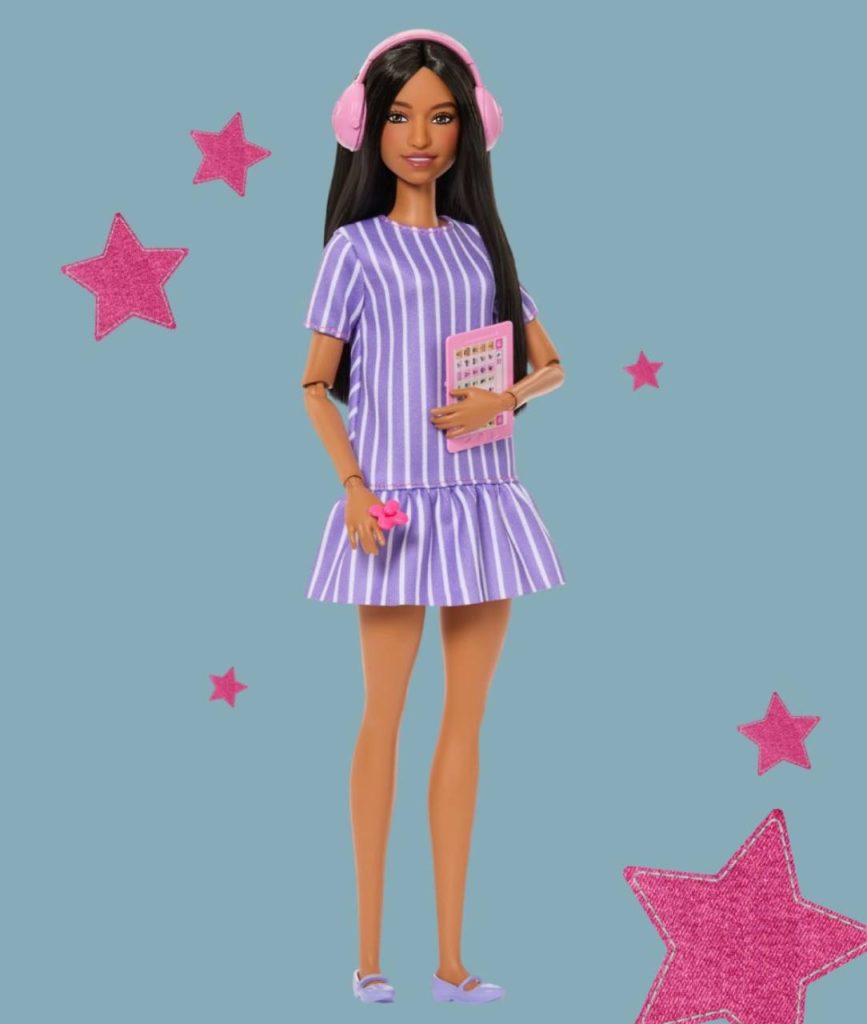
Mattel Inc. is expanding its inclusive Barbie line with the launch of an autistic Barbie on Monday, marking another step in the toymaker’s efforts to reflect diversity in its products. The Fashionistas collection already features dolls with Down syndrome, visual impairments, vitiligo, and a variety of body types and skin tones.
The autistic Barbie was created in collaboration with the Autistic Self Advocacy Network (ASAN), a nonprofit that champions the rights and representation of autistic people. The project took more than 18 months to ensure the doll authentically represented aspects of how some autistic individuals perceive and interact with the world.
“No two autistic people are the same, and autism doesn’t look any one way,” said Noor Pervez, ASAN’s community engagement manager, who advised Mattel on the doll. “Our goal was to show some of the ways autism expresses itself in daily life.”
ALSO READ: FULL LIST: Golden Globes 2026 winners
The doll incorporates several thoughtful design features: eyes that shift slightly to the side to mirror how some autistic people avoid direct eye contact, articulated elbows and wrists to reflect stimming behaviors, and clothing designed for comfort, including a flowy A-line dress and flat shoes. Accessories include a pink fidget spinner, noise-canceling headphones, and a tablet modeled after communication devices used by non-verbal individuals.
“Barbie has always aimed to mirror the world kids see and the possibilities they imagine,” said Jamie Cygielman, Mattel’s global head of dolls. “Introducing our first autistic Barbie is part of that ongoing mission.”
The doll will be available Monday through Mattel’s online store and Target for $11.87, with Walmart carrying it starting in March.
According to the Centers for Disease Control and Prevention, roughly 1 in 31 eight-year-old children in the U.S. are autistic, with boys diagnosed at a higher rate than girls and prevalence higher among Black, Hispanic, Asian, and Pacific Islander children than white children.