
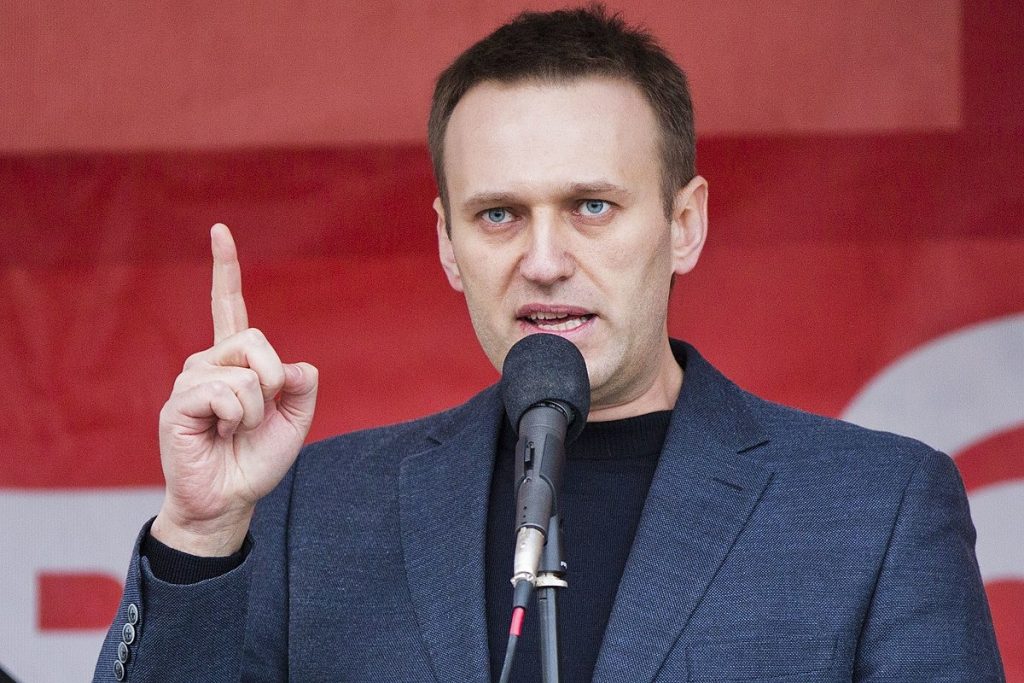
The United Kingdom and several European allies have accused Russia of killing opposition leader Alexei Navalny using a poison linked to a toxin found in dart frogs.
British officials said laboratory analysis of samples taken from Navalny’s body showed traces of epibatidine, a rare toxin not naturally found in Russia.
The UK Foreign Office said the substance could not have entered his system by accident.
Speaking at the Munich Security Conference, Foreign Secretary Yvette Cooper said: “Only the Russian government had the means, motive and opportunity to deploy this lethal toxin against Alexei Navalny during his imprisonment in Russia.”
The UK released the findings alongside Sweden, France, Germany and the Netherlands in a joint statement blaming the Russian state for Navalny’s death.
Cooper also met Navalny’s widow, Yulia Navalnaya, during the conference.
“Russia saw Navalny as a threat,” Cooper said.
“By using this form of poison, the Russian state demonstrated the despicable tools it has at its disposal and the overwhelming fear it has of political opposition,” she added.
In the joint statement, the allies said: “Only the Russian state had the means, motive and opportunity to deploy this lethal toxin to target Navalny during his imprisonment in a Russian penal colony in Siberia, and we hold it responsible for his death.
“Epibatidine can be found naturally in dart frogs in the wild in South America. Dart frogs in captivity do not produce this toxin and it is not found naturally in Russia.
“There is no innocent explanation for its presence in Navalny’s body.”
ALSO READ: UK phases out visa stickers, moves fully digital from February 25
The Foreign Office said Britain has reported Russia’s alleged breach of the Chemical Weapons Convention to the Organisation for the Prohibition of Chemical Weapons.
French Foreign Minister Jean-Noël Barrot said his country “pays tribute” to Navalny, who he described as someone “killed for his fight in favour of a free and democratic Russia”.
Navalny, Russia’s most prominent opposition figure and an anti-corruption campaigner, died in custody on 16 February 2024 at the age of 47.
He had previously survived a poisoning attack in 2020 involving the Novichok nerve agent, received treatment in Germany, and was arrested immediately after returning to Russia.
Before Saturday’s announcement, Navalnaya had repeatedly claimed her husband was poisoned while serving his sentence in an Arctic penal colony.
In September last year, she said laboratory tests on smuggled biological samples showed her husband had been “murdered”, though she gave no further details about the poison or the findings.
Reacting to the latest development, Navalnaya said: “I was certain from the first day that my husband had been poisoned, but now there is proof.
“I am grateful to the European states for the meticulous work they carried out over two years and for uncovering the truth,” she added.
The Kremlin has not commented on the accusations.
Russian President Vladimir Putin, who avoided mentioning Navalny by name while he was alive, made only a brief remark after his death, describing the passing of a person as “always a sad event”.
At the time of his death, Navalny had spent three years in prison on charges widely described by supporters as politically motivated. He had recently been moved to a penal colony near the Arctic Circle.
Russian authorities claimed he became ill after taking a short walk, collapsed, and never regained consciousness.
(BBC News)