
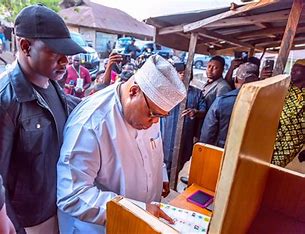
The Osun State local government elections took place on February 22, 2025, despite warnings from the Attorney General of the Federation and the Nigeria Police Force. Voters in all 30 local government areas cast their ballots from 8 a.m. Governor Ademola Adeleke voted in Ede North, describing the process as smooth. He urged residents to remain peaceful.
A recent Court of Appeal ruling in Akure sparked a dispute over the tenure of local government officials. The ruling upheld appeals by chairmen elected under the All Progressives Congress (APC) during the October 15, 2022, polls. A Federal High Court in Osogbo later nullified that election. The appellate decision fueled legal debates about whether the dismissed officials should return or if a new election was necessary.
Attorney General Lateef Fagbemi urged the state government to delay the election, citing unresolved legal issues. The Nigeria Police Force also warned of potential violence.
“Given the volatile situation, we strongly advise postponement to prevent any breakdown of law and order,” a senior police official said earlier in the week.
Despite these concerns, the Osun State government moved forward, arguing that judicial directives allowed the election. Commissioner for Information and Public Enlightenment, Kolapo Alimi, insisted that no legal basis justified stopping the process.
“We are bound by the rule of law, and nothing in the court’s ruling prevents this election,” he said.
Security forces increased their presence before the election. Heavily armed officers patrolled local government secretariats to prevent unrest. Opposition party members and supporters of dismissed officials continued protests. Some APC leaders accused the ruling People’s Democratic Party (PDP) of trying to seize control of the councils before a legal resolution.
Observers reported a mostly peaceful election, though some polling units saw minor disruptions. The state electoral commission assured residents that officials would count votes transparently and announce results quickly. As ballot counting continues, political and legal uncertainties persist. The outcome could reshape Osun State’s political landscape, testing its democratic institutions.