
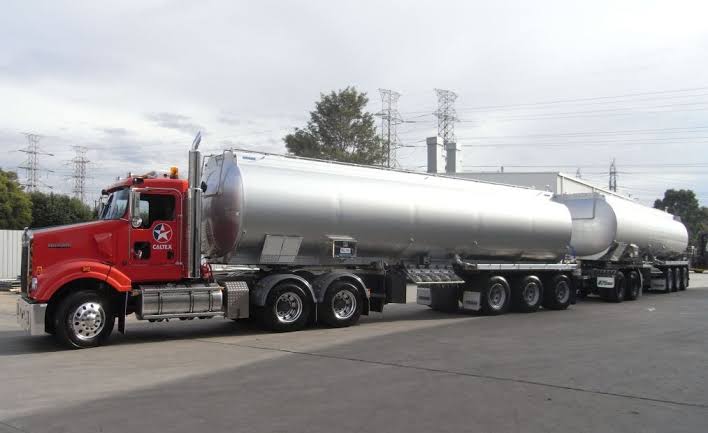
The Nigerian government has announced a ban on fuel tankers exceeding 60,000 liters, effective March 1, 2025, in an effort to reduce the rising number of road accidents.
Over the years, several tragic crashes involving petroleum transporters have raised serious safety concerns. Consequently, authorities believe this move will help prevent further disasters.
The Nigerian Midstream and Downstream Petroleum Regulatory Authority (NMDPRA) issued the directive, stating that no truck carrying more than the specified capacity will be allowed to load at depots. Furthermore, the agency plans to lower the limit to 45,000 liters by the fourth quarter of 2025.
“We engaged key stakeholders before making this decision. Safety on our roads must improve,” said Ogbugo Ukoha, NMDPRA’s Executive Director of Distribution Systems, Storage, and Retailing Infrastructure.
Recently, fuel tanker accidents have increased at an alarming rate. Since President Bola Tinubu took office in May 2023, Nigeria has recorded 28 tanker crashes, resulting in 468 deaths. For instance, on January 18, 2025, a fuel tanker exploded at Dikko Junction in Suleja, Niger State, killing at least 98 people. Just a week later, another explosion at Ugwu Onyeama in Enugu State claimed over 20 lives. In most cases, brake failure, reckless driving, and poor road conditions contributed to these accidents. Therefore, the government believes that stricter regulations are necessary to curb these tragedies.
The ban followed extensive discussions with key stakeholders, including the Department of State Services (DSS), the Federal Road Safety Corps (FRSC), the Federal Fire Service, the Standards Organisation of Nigeria (SON), the National Association of Road Transport Owners (NARTO), the National Union of Petroleum and Natural Gas Workers (NUPENG), and the Depot and Petroleum Products Marketers Association of Nigeria (DAPPMAN). Ultimately, the goal is to make petroleum transportation safer while minimizing risks to the public.
However, not everyone supports this policy. NARTO has expressed strong concerns about its financial impact. According to the association’s president, Yusuf Othman, the ban on fuel tankers could lead to losses of up to N300 billion for tanker owners. At present, approximately 2,000 petroleum tankers in Nigeria operate with a 60,000-liter capacity, and each truck costs around N150 million.
“The problem is not just tanker size. Poor roads and reckless driving contribute more to accidents,” Othman argued.
Instead of focusing solely on capacity reduction, he urged the government to improve road conditions and enforce stricter driving regulations.
In addition to the new capacity restrictions, the NMDPRA has introduced several other safety measures. Moving forward, tankers must install anti-spill valves to prevent fuel leaks in the event of a crash. Moreover, public awareness campaigns will educate people on the dangers of fuel scooping at accident scenes. At the same time, authorities are tightening regulations on vehicle maintenance to ensure that tankers remain roadworthy. Officials stress that full compliance with these measures is crucial in preventing further tragedies.
As the March 1 deadline approaches, opinions remain divided. On one hand, some industry players support the ban, arguing that safety must come first. On the other hand, others worry about potential disruptions in fuel supply and rising transportation costs. Nevertheless, the government insists that all stakeholders must comply for the greater good.
Given Nigeria’s heavy reliance on road transport for fuel distribution, finding long-term solutions is essential. While pipelines and rail networks could serve as safer alternatives, they remain underdeveloped. Until those options become viable, balancing safety concerns with economic realities will continue to be a challenge.