
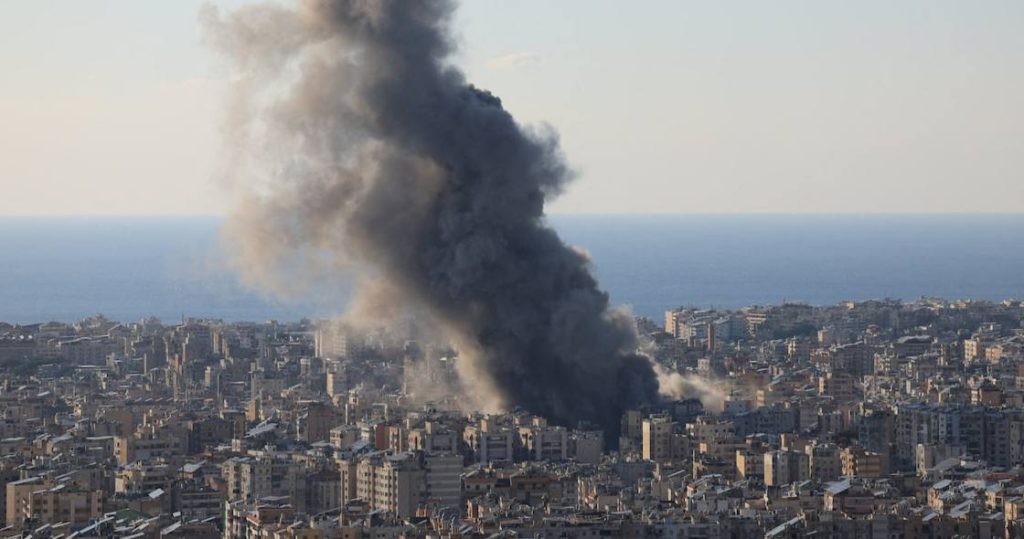
Israel launched fresh airstrikes in Lebanon on Thursday, further weakening an already fragile ceasefire and raising doubts over planned peace talks in the region, as per Reuters.
The strikes came just days after Israel carried out its biggest attacks of the war on its northern neighbour, killing more than 250 people and triggering fears that the truce could collapse before it fully takes hold.
The ceasefire, backed by U.S. President Donald Trump, has already faced confusion, with different sides disagreeing on whether it includes the fighting in Lebanon.
Iranian negotiators were expected to travel to Pakistan on Thursday ahead of talks with a U.S. delegation led by Vice President JD Vance on Saturday, in what is seen as a key test for the deal.
But tensions remain high. Iran has said there will be no agreement while Israel continues strikes in Lebanon, and there is still no clear sign that the Strait of Hormuz blockade has been lifted.
Israel says its operations target Hezbollah and are not covered by the ceasefire. The United States has also said Lebanon is outside the truce, while Iran and mediator Pakistan say it was included in the agreement.
Britain, France and other allies have called for the ceasefire to extend to Lebanon and have condemned Israel’s continued strikes.
Israel said it killed a senior Hezbollah-linked figure and struck infrastructure used by the group, including river crossings.
ALSO READ: Israel explains killing of Al Jazeera journalist, Mohammed Wishah
Lebanese state media reported renewed strikes on Beirut’s southern suburbs overnight and attacks on towns in the south.
Hezbollah said it had resumed attacks after a brief pause and fired into Israel and at Israeli forces in southern Lebanon.
Rescue teams worked through the night in heavily damaged areas as civilians described widespread destruction.
“This is my place, this is my house, I’ve been living here like more than 51 years. So, everything destroyed. See?” said Naim Chebbo in Beirut.
Iran condemned the strikes, calling them a serious violation.
“What happened yesterday was grave violation,” Iranian deputy foreign minister Saeed Khatibzadeh told BBC Radio.
“It was a catastrophe, could actually end in more catastrophe, and this is the nature of this rogue behaviour that we are seeing from Israel in the whole Middle East.”
Oil markets also reacted, with physical crude prices hitting record levels due to supply disruptions.
With fighting continuing and no agreement on key terms, uncertainty remains over whether the ceasefire and planned peace talks can hold.