
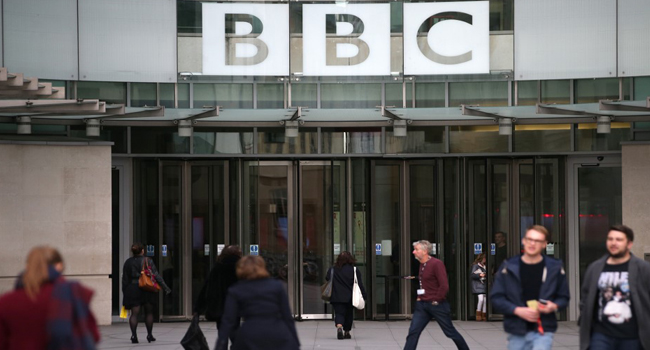
The British Broadcasting Corporation (BBC) said on Wednesday it plans to cut up to 2,000 jobs as it responds to changes in the media industry and rising financial pressure.
The BBC’s interim director-general, Rhodri Talfan Davies, said in a statement to staff that “while we still have to work through the detail, we anticipate the overall number of jobs will fall by 1,800-2,000”.
The BBC reported the cuts on Wednesday afternoon, noting they account for “almost one in 10” jobs out of its workforce of about 21,500 employees.
In a message to staff seen by AFP, Talfan Davies said the move is driven by “significant financial pressures, which we need to respond to at pace”.
“Put simply, the gap between our costs and our income is growing,” said Talfan Davies, who is serving in the role on a temporary basis.
“Inevitably, these plans will also mean reducing the number of jobs in the BBC,” he added, following an all-staff call.
The broadcaster is aiming to cut £500 million from its £5 billion operating costs over the next two years. It had earlier said it needed to reduce spending by 10 percent over the next three years.
The planned reductions would mark the largest round of job cuts at the BBC in nearly 15 years, according to ITV News and the Press Association. In 2011, the corporation announced plans to cut 2,000 roles over five years and move some staff out of London.
Talfan Davies told BBC radio that “there are going to be some big and some difficult choices”.
Union leaders criticised the move. The head of the Bectu union, Philippa Childs, said “cuts of this magnitude will be devastating for the workforce and to the BBC as a whole”.
The general secretary of the National Union of Journalists, Laura Davison, also condemned the decision, saying it was “wrong, damaging and will cause uncertainty and distress for workers at the BBC”.
The cuts come as the broadcaster deals with shifts in how audiences consume content and the growing impact of artificial intelligence.
The BBC is funded mainly through a licence fee paid by the public to watch live content. It says 94 percent of UK adults use its services each month.
In a report released in March, the BBC said income from the licence fee had fallen by 24 percent in real terms since 2017.
“We must reduce our total cost base by a further 10% by March 2029 due to licence fee headwinds and other pressures,” the report said, adding that “tough choices may require cuts to content and services”.
ALSO READ: Dangote named among 2026 TIME100 most influential people
The development also comes amid legal challenges. US President Donald Trump has filed a $10 billion defamation lawsuit against the broadcaster over a documentary that edited his 2021 speech ahead of the US Capitol riot.
The BBC’s former director-general, Tim Davie, resigned over the case and stepped down at the start of April.
A new director-general, former Google executive Matt Brittin, is expected to take over next month, with his appointment described as leading the organisation “through transformation”.
AFP