
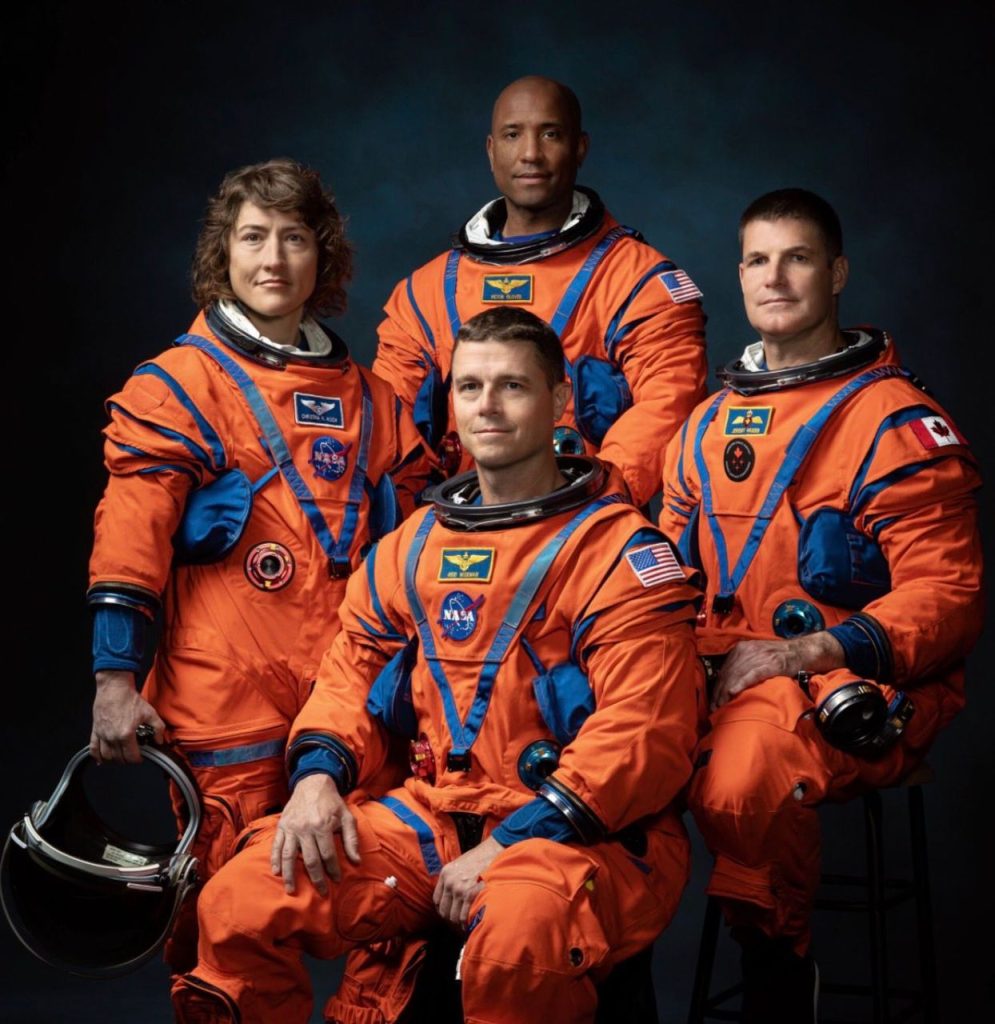
NASA’s Artemis II astronauts are approaching a historic milestone as they travel deeper into space, closing in on the farthest distance ever reached by humans from Earth.
The four-member crew entered the moon’s gravitational sphere early Monday while continuing their journey aboard the Orion capsule, which launched from Florida last week. They are expected to wake at 10:50 a.m. ET on their sixth day in space, with the mission set to reach its maximum distance of about 252,757 miles from Earth by 7:05 p.m. ET.
At that point, the astronauts will surpass the record held by the Apollo 13 crew by more than 4,000 miles, setting a new benchmark in human spaceflight.
ALSO READ: Obi faults Tinubu over recurring attacks after security assurance
As NASA astronauts Reid Wiseman, Victor Glover and Christina Koch, alongside Canadian astronaut Jeremy Hansen, approach the record, they will be flying over the moon’s far side. From about 4,000 miles above the surface, they will observe the darkened lunar terrain with Earth appearing small in the distance.
The mission marks a major phase in the nearly 10-day Artemis II flight, the first crewed test under NASA’s Artemis programme. The initiative aims to return humans to the moon by 2028 and establish a sustained presence that could support future missions to Mars.
The lunar flyby, scheduled to begin at 2:34 p.m. ET, will temporarily cut communication as the moon blocks signals between the spacecraft and NASA’s Deep Space Network.
During the six-hour flyby, the astronauts will capture detailed images of the moon using onboard cameras, documenting a rare view of sunlight outlining its edges in a phenomenon similar to a lunar eclipse.
They are also expected to photograph Earth rising over the lunar horizon as the spacecraft re-emerges from behind the moon, offering a unique perspective rarely seen by humans.
Back on Earth, scientists at NASA’s Johnson Space Center in Houston will monitor the mission closely, recording the astronauts’ observations as they describe the lunar environment in real time.
(Reuters)