
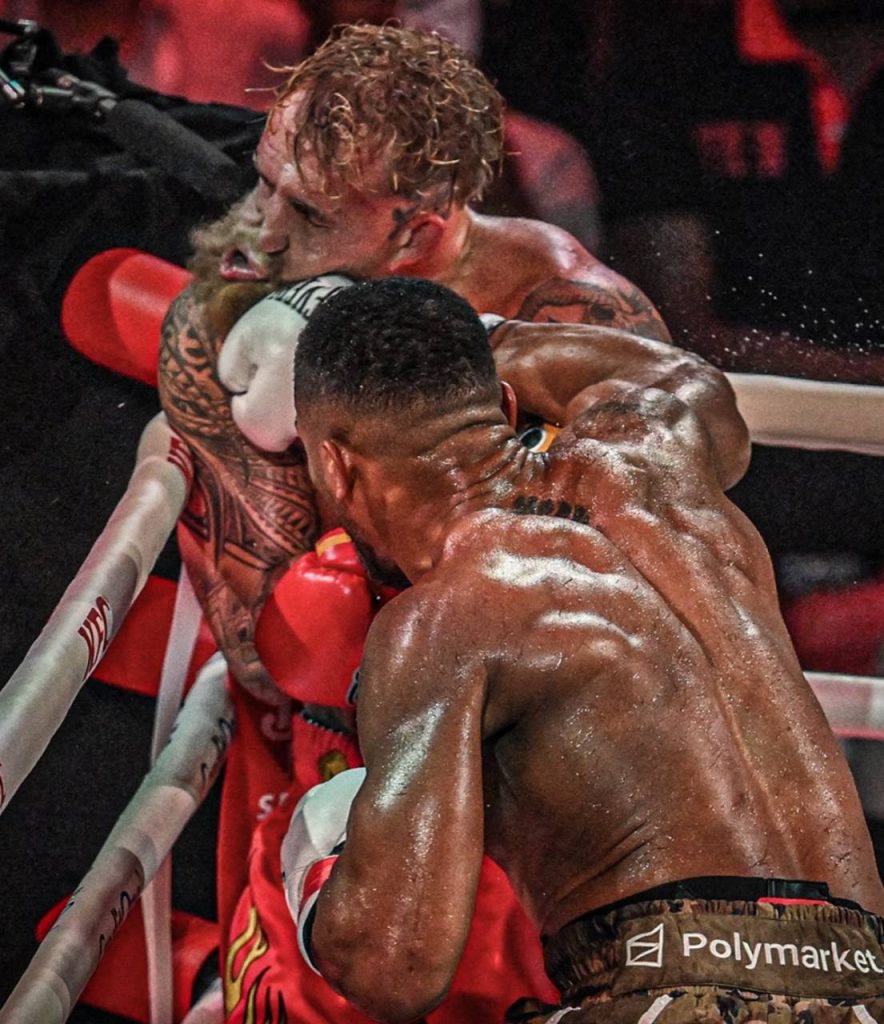
Anthony Joshua’s victory over Jake Paul on December 19 delivered more than just another win on his professional record. It produced one of the biggest paydays boxing has seen in years.
The former unified heavyweight champion stopped the YouTuber-turned-boxer after six rounds in front of a capacity crowd at the 20,000-seat Kaseya Center, closing the curtain on a bout that divided opinion but dominated commercial headlines.
Despite criticism over the competitiveness of the matchup, the financial figures attached to the fight were staggering. Reports widely placed the total purse at $184 million, with Joshua and Paul expected to split the sum.
ALSO READ: Anthony Joshua wins by KO, leaves Jake Paul’s jaw broken
Ahead of the bout’s confirmation in November, the Daily Mail revealed the scale of the deal, reporting: “Sources tell us that a gargantuan prize pot of around £140m [$184m] has been mooted,” a figure believed to be shared evenly between the two fighters.
Jake Paul later fueled speculation over even higher earnings. Posting on X (formerly Twitter) days after the report, he wrote: “Stop asking me. $267 Million.” The post appeared to suggest the overall financial value of the event exceeded initial estimates.
Even at the lower figure, experts say the payouts are historic. Sports and entertainment accountant Oriana Morrison told The Independent that Joshua’s share alone would place the fight among boxing’s most lucrative. “Even if the lower figure, the rumoured $184m purse, is true, AJ could bring home $92m [£70m],” she said. “We haven’t seen a boxing match with a purse at this level since Mayweather vs Pacquiao in 2015 or even Mayweather vs McGregor in 2017.”
The earnings represent a career-high payday for Joshua and further highlight Jake Paul’s drawing power at the box office. Though widely labeled a mismatch, the fight’s financial success underscored how promotion, celebrity appeal and crossover audiences continue to reshape boxing’s economics.