
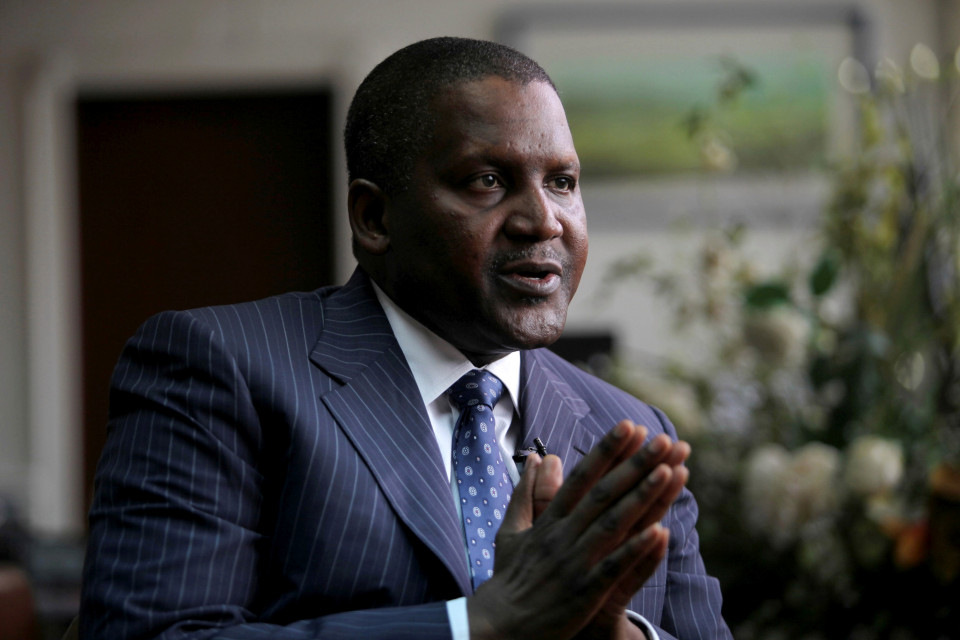
Africa’s richest man, Aliko Dangote, has once again brought the spotlight back to what he considers the nation’s biggest opportunity, and its greatest failure: industrial self-reliance.
At the 53rd Annual General Meeting of the Manufacturers Association of Nigeria (MAN) held in Lagos, the President and Chief Executive of Dangote Industries Limited delivered a powerful keynote that challenged both government and industry players to “act now” in institutionalising a Nigeria First policy.
“The ‘Nigeria First’ Policy is not just a slogan but a call to action for sustained development and transformation led by our manufacturers,” Dangote declared before an audience of policymakers, captains of industry, and development partners at the Oriental Hotel.
The theme of the AGM, “Nigeria First: Prioritising Made-in-Nigeria,” could not have been more apt for Dangote, whose conglomerate has become a symbol of Africa’s shift from import dependence to local production. From cement and sugar to petrochemicals and fertiliser, the Dangote brand has proven that large-scale manufacturing is not only viable but critical to national prosperity.
A Call for a National Industrial Policy
In his address, Dangote called for legislation to make the Nigeria First policy a binding national framework that would survive political transitions and market fluctuations.
He warned that the absence of a coherent and enforceable policy has left Nigeria’s manufacturing sector stagnating, with its contribution to GDP still below 10 per cent; a figure that has barely moved in more than a decade.
“If countries like China, India, and the United States can design laws that protect and empower local manufacturers, there is no reason Nigeria cannot do the same,” he said.
ALSO READ: Dangote retains Nigeria’s most valuable brand title for eighth consecutive year
He proposed that all Ministries, Departments, and Agencies (MDAs) should be mandated to allocate at least 65 per cent of their procurement budgets to locally manufactured products, backed by an independent compliance agency with powers to sanction offenders.
Dangote also emphasised the need for policy stability, improved access to finance, and targeted investments in energy and infrastructure, noting that unreliable power supply, high logistics costs, and multiple taxation continue to cripple industrial growth.
Lessons from the Past: The Textile Industry’s Decline
Drawing from history, Dangote cited the fall of Nigeria’s textile industry as a painful reminder of what happens when policy and enforcement fail.
Once employing over 500,000 workers across 180 mills, the sector collapsed under the weight of unchecked imports, outdated technology, and inconsistent government support.
“The textile industry’s demise should serve as a warning,” Dangote said. “Without protection, investment, and pride in local products, no economy can sustain industrialisation.”
Beyond Words: A Call to Action
To turn the tide, Dangote outlined eight strategic steps manufacturers expect from the Nigeria First framework, from legislating local content laws to leveraging the African Continental Free Trade Area (AfCFTA) for export competitiveness.
He also urged government and the private sector to drive a nationwide “Buy Made in Nigeria” campaign to shift consumer behaviour and restore confidence in locally produced goods.
“Let’s Act”
Concluding his address, Dangote struck a note of urgency:
“Every nation is in a race to improve the living conditions of its citizens. The government has done a few things that have given us a fighting chance. The Nigeria First policy, if embraced, will place us in a very competitive position. Let’s act.”
The 53rd MAN AGM brought together leading manufacturers, economists, and policymakers to explore strategies for deepening industrial capacity and positioning Nigeria as a manufacturing hub for Africa.
As Dangote’s voice echoed through the hall, one message was unmistakable: for Nigeria to prosper, it must first believe in and invest in itself.