
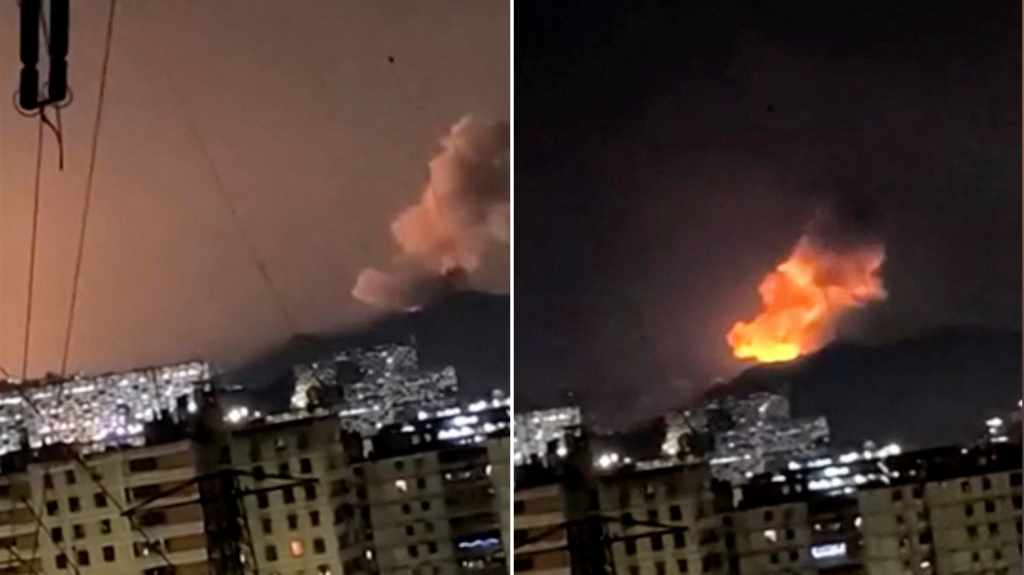
The United States carried out military strikes in Venezuela early Saturday, marking a major escalation after months of tension between Washington and Caracas.
President Trump confirmed the operation, saying Venezuelan President Nicolás Maduro and his wife were “captured and flown out of the Country.” He described the action as a “large scale strike” ordered by the U.S. government, following reports of explosions in Caracas and other locations.
U.S. officials told CBS News that American troops, including members of Delta Force, were involved in the operation to capture Maduro. The strikes followed a sustained U.S. military buildup in the region, with the USS Gerald R. Ford aircraft carrier and other naval assets deployed in the Caribbean.
In recent weeks, the U.S. had seized two oil tankers near Venezuela, launched strikes on more than 30 boats it said were carrying drugs, and targeted what President Trump called “the dock area where they load the boats up with drugs.”
The Trump administration has accused Maduro of drug trafficking and working with gangs designated as terrorist organizations, allegations Maduro has denied. On Christmas Eve, Mr. Trump declined to outline a specific end goal but warned that if Maduro “plays tough, it’ll be the last time he’ll ever be able to play tough.”
Following the strikes, the State Department warned U.S. citizens in Venezuela to shelter in place, citing reports of explosions in and around Caracas. The department reiterated long-standing travel warnings for Venezuela due to security risks and poor infrastructure.
ALSO READ: BREAKING: Venezuela’s Maduro ‘captured’ after attacks — Trump
Reaction in Washington was mixed. Democratic Sen. Ruben Gallego of Arizona called the action illegal, while Republican Sen. Mike Lee of Utah questioned whether it was constitutionally justified without congressional approval. Previous efforts in Congress to block military action against Venezuela without authorization had failed.
Venezuela’s government declared a state of emergency and called on its supporters to mobilize. In a statement, it said President Nicolás Maduro had ordered all national defense plans to be activated and accused the U.S. of military aggression. The government also called for an emergency meeting of the United Nations Security Council.
Opposition figures in Venezuela offered a different response. Opposition leader María Corina Machado previously expressed support for President Trump’s strategy and said she welcomed increased pressure on Maduro, including the possibility of military action.
According to opposition sources, U.S. strikes hit several locations, including military bases in Caracas and the port of La Guaira. Smoke was seen rising from parts of the capital, and some military facilities reportedly lost power.
The Federal Aviation Administration banned U.S. commercial flights over Venezuela due to safety concerns related to ongoing military activity.
The strikes came days after Maduro said he was open to talks with the U.S. on drug trafficking, oil, and migration, even as he accused Washington of trying to remove him from power.
Maduro has remained in office since 2013 and was sworn in for a third term earlier this year following a disputed 2024 election. The U.S. recognized opposition candidate Edmundo González as the winner and imposed sanctions on Venezuelan officials involved in the vote.
U.S. officials said President Trump approved the strikes days before they were carried out, with the timing influenced by operational and weather considerations. The Pentagon referred all questions to the White House.