
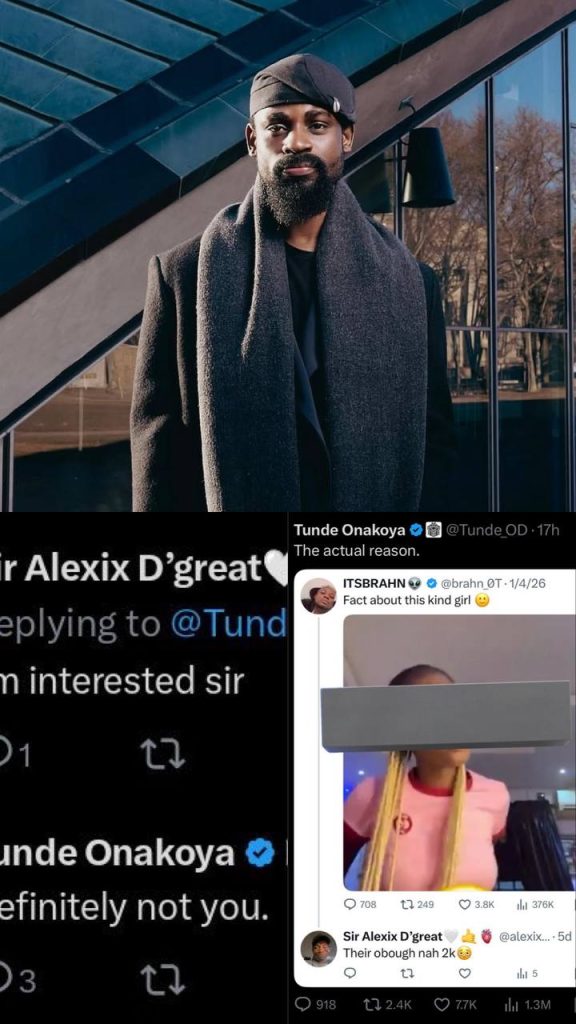
The founder of Chess in Slums Africa, Tunde Onakoya, has stirred debate on social media after publicly rejecting a job applicant over a past comment made on X.
On January 12, Onakoya announced an opening for a personal assistant in Lagos. He said he was looking for a sharp and detail-oriented person, drawing inspiration from Suits characters Donna Paulsen and Harvey Specter.
A football fan identified as Sir Alexix D’great responded to the post with a short message, saying, “I’m interested sir.”
Onakoya later turned down the application publicly. In a follow-up post, he shared a screenshot of an earlier comment linked to the applicant. In the comment, the applicant used slang to describe a woman’s body as being worth just ₦2,000. Onakoya said the remark did not align with the values of his Chess in Slums initiative.
The decision quickly sparked mixed reactions on X.
ALSO READ: UK regulator probes X as Grok AI faces global backlash over sexualised imagery
Some users praised Onakoya for taking a stand on character and online behaviour. Reacting to the post, popular X user @OurFavOnlineDoc warned, “Pls be careful what you post on this app. Not everything is ‘jokes.’ Some stupid silly posts can cost you serious opportunities in life.”
Others criticised what they described as selective judgment. User @justranky wrote, “I love how everybody is supporting Tunde and judging that guy based on his old tweets. Y’all should keep the same energy when we dig up any girl past tweets tomorrow.”
A few users argued that while employers can make value-based decisions, the rejection did not need to be public. They said Onakoya could have ignored the application and chosen another candidate quietly.
Supporters, however, insisted that a person’s digital footprint matters, especially for organisations that work closely with young and vulnerable people.
The issue also took on a gender angle, with claims of double standards. User @GuyMr10 wrote, “Tunde Onakoya that gave one w*cked feminist a chance few months ago has just denied a boy job opportunity because of his comment that has nothing to do with the job, omo boys life just hard anyhow.”
The incident has renewed discussions around online conduct, hiring decisions, and the long-term impact of social media posts on career opportunities.