
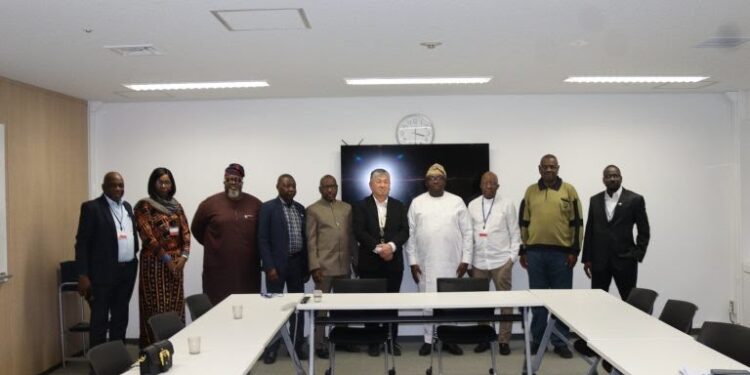
Nigeria’s Federal Government has reached out to Japan for financial support to co-finance a major rural electrification project. The government announced the initiative on February 22, 2025, and plans to utilize a $750 million World Bank IDA credit to jump-start the endeavor. Consequently, the project aims to provide reliable electricity to 17.5 million Nigerians who currently live without power.
Furthermore, the new drive will deploy distributed renewable energy solutions across rural and underserved communities. Officials intend to install both isolated and interconnected mini-grids as well as stand-alone solar systems. These systems will, in turn, power homes, schools, health centers, and local businesses. Moreover, the government expects that the project will not only boost economic growth but also significantly reduce energy poverty.
In addition, Minister of Power, Chief Adebayo Adelabu, stated, “We are exploring every avenue to ensure this project is robust and sustainable.”
He stressed that Japan’s expertise in renewable energy finance and technology will prove invaluable. Likewise, Adelabu added, “Our partnership with Japan will help us overcome financing challenges and bring clean power to millions.”
Thus, the government is committed to leveraging international collaboration to transform Nigeria’s energy landscape.
Government sources have revealed that the project will attract over $1 billion in private capital. Moreover, additional support will come from international partners such as USAID and the Global Energy Alliance for People and Planet. Notably, Japan’s involvement is expected to materialize through the Japan International Cooperation Agency (JICA), which the government is actively courting. As a result, this move marks a strategic effort to diversify funding sources and secure essential technical know-how.
Significantly, the project builds on past successes in rural electrification. Previously, several programs installed dozens of mini-grids and solar home systems in remote areas. Consequently, these earlier efforts reduced reliance on expensive diesel generators and created green jobs. Now, the new initiative seeks to expand these achievements on a much larger scale and promises to lower greenhouse gas emissions by replacing fossil-fuel generators with renewable energy systems.
Officials expect the project to span five years. In the meantime, they plan to roll out the electrification schemes in phases. Initially, the government will focus on the most remote regions suffering from chronic power shortages. Subsequently, the plan includes upgrading existing infrastructure and enhancing local grid capacity. Ultimately, the overall goal is to bridge the energy gap that has long stunted Nigeria’s development.
Moreover, the government insists that electrification will transform rural life. Improved power access will stimulate local industries and encourage further investment. As a result, it will also reduce rural-urban drift by making remote areas more attractive for settlement and business. Consequently, community leaders have welcomed the project, hoping it will bring lasting change to their regions.
Nigeria’s call for Japan’s assistance highlights a bold and innovative step toward universal energy access. Overall, the government is determined to leverage international expertise and private investment to build a cleaner, more efficient energy system. Ultimately, this comprehensive initiative could serve as a model for sustainable rural development in Africa.