
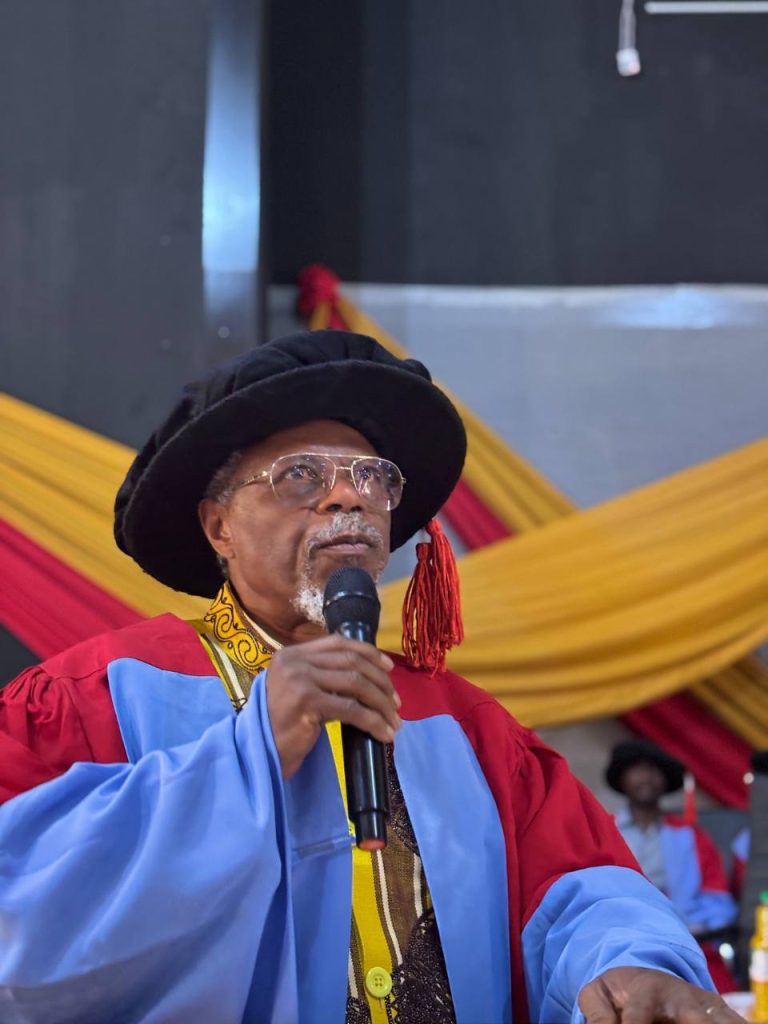
Professor Toyin Falola has described history as Africa’s moral compass, urging young historians to protect the continent’s past in order to shape its future.
Falola spoke at the University of Jos during the induction of new members into the Historical Society of Nigeria (HSN), where he warned that Africa continues to suffer from distorted historical narratives rooted in colonial thinking.
“History is not just the collection of facts; it is humanity’s repository of morals,” he said. “When the truth is compromised, history withers.”
The renowned scholar traced the founding of the Historical Society of Nigeria to 1955 at the former University College Ibadan, explaining that the association was created to secure intellectual independence for African scholars after colonial rule.
“My dear students, today you are being drafted, like soldiers, into the Historical Society of Nigeria,” Falola told the inductees, describing the body as a platform for what he called “epistemic freedom.”
ALSO READ: Nigeria’s Owolabi Salis makes history as first Nigerian in space
According to him, colonial historians deliberately portrayed Africa as a continent without history before European contact, a distortion he said still affects how Africa is viewed today.
“History as a discipline was weaponized against Africa,” Falola said. “Without reclaiming our history through Afrocentric methods, African societies risk building their future on false memories.”
He said the HSN responded to this challenge by promoting African-centred research and debate, including the establishment of the Journal of the Historical Society of Nigeria in 1956.
Falola stressed that historians remain vital in times of political instability and misinformation.
“Every society needs historians because they insist on context, facts and complexity when society is being misled,” he said.
He warned students against plagiarism, shortcuts and falsified narratives, noting that integrity remains central to historical scholarship.
“Plagiarism and recycled narratives are greatly frowned upon in our line of work,” he said.
While acknowledging the risks posed by digital technology, Falola urged historians to engage with artificial intelligence responsibly and ensure African histories are not excluded from digital systems.
“You are uniquely positioned to become the moral backbone of Nigeria’s relationship with AI,” he said.
In his final charge, Falola urged the inductees to embrace courage, discipline and humility in their work.
“Without ethics, you are no more than a storyteller serving distortion,” he said. “Your commitment to truth will earn you relevance, dignity and the honour of serving Africa.”