
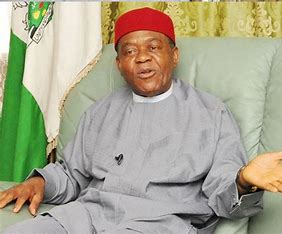
The EFCC has charged former Abia State Governor Theodore Orji, his son Chinedum Orji, and three others with a massive fraud scheme. In a significant move against corruption, the commission filed 16 counts of conspiracy, official corruption, theft, and diversion of public funds amounting to ₦60.85 billion. Moreover, the prosecution claims the defendants misappropriated funds from security votes and Paris Club refunds meant for Abia State.
Initially, allegations emerged in February 2020 when the Fight Corruption: Save Nigeria Group filed a petition. Consequently, the petition alleged that Orji and his allies diverted over ₦500 billion from public accounts. In response, the EFCC launched a full investigation. Later, in August 2021, agents arrested Orji at Nnamdi Azikiwe International Airport. Simultaneously, his son, who served as Speaker of the Abia State House of Assembly, surrendered to the commission. Thereafter, both men underwent interrogation and were released on bail pending further investigations.
Subsequently, on February 28, 2025, the EFCC arraigned the accused before Justice Lilian Abai at the Abia State High Court in Umuahia. During the hearing, authorities presented detailed evidence linking the defendants to fraudulent transactions. Furthermore, the prosecution argued that the group colluded to manipulate procurement processes and illegally convert public funds. For instance, they claim the conspirators misappropriated ₦22 billion from security votes and diverted ₦12 billion from Paris Club refunds. Additionally, other financial irregularities contributed to the total alleged fraud.
Moreover, EFCC officials provided documents and witness testimonies that painted a damning picture of the accused. One EFCC spokesperson declared, “We are determined to bring corrupt officials to justice. This case sends a clear message that no one is above the law.” His statement resonated with many Nigerians who demand accountability from public figures. In addition, the detailed charges underscore the gravity of the corruption at hand.
Meanwhile, political observers noted that this case may mark a turning point in Nigeria’s battle against financial crimes. They argued that a strong judicial response could restore public confidence in governance. Similarly, citizens expressed mixed reactions. Some called for harsh penalties, while others urged caution and thorough investigation. In any event, the case has already stirred significant debate nationwide.
Furthermore, the trial highlights a complicated legacy. Former Governor Orji once earned praise for developmental projects during his tenure from 2007 to 2015. However, the allegations now cast a long shadow over his legacy. In addition, the involvement of his son, Chinedum Orji, has deepened the controversy. Critics insist that the mismanagement of public funds has tainted the Orji family name and exposed systemic corruption within the political elite.
Additionally, the three other defendants Nto, Onwumene King Obioma, and Romanus K. Madu face similar charges. Authorities claim these individuals worked closely with Orji to divert funds for private gain. They allege that the group manipulated state accounts to enrich themselves at the expense of public welfare. Consequently, the case represents one of the most significant anti-corruption efforts in recent years.
As the trial progresses, legal experts predict that further revelations will emerge. They emphasize that stringent oversight and robust legal frameworks are crucial to prevent such abuses. Moreover, lawmakers and civil society groups continue to demand greater transparency in the management of public funds. In doing so, they hope to safeguard Nigeria’s financial integrity.
The arraignment of ex-Governor Orji, his son, and their associates sends a powerful message. The EFCC’s decisive action reinforces that corruption carries steep consequences. As the court sets dates for subsequent hearings, all eyes remain on this high-profile case. In summary, this landmark trial stands as a critical juncture in Nigeria’s relentless fight against corruption and the quest for justice.