
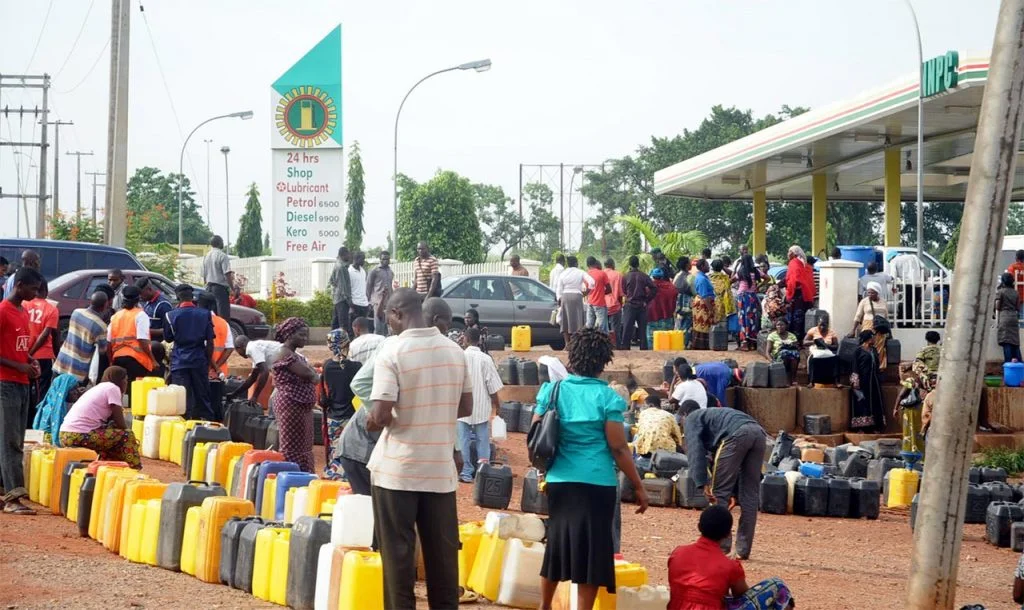
The price of Premium Motor Spirit (Petrol) has increased to above N1000 per liter in various regions of Nigeria, much to the distress of the people living within.
In a Monday exclusive interview, Anthony Chiejina, the spokesperson for the Dangote Group, stated that the Dangote gasoline would promote national productivity, provide energy security, and reduce never-ending fuel lines.
He also said “The Refinery has started producing Premium Motor Spirit. When it gets to commercial quantity and hits the market, you will know”
“The aim is to ensure that the product is available and affordable, so that Nigerians will not continue to queue endlessly losing man-hours of work,” he said.
The goal is to make sure the product is accessible and reasonably priced so Nigerians won’t have to stand in line all the time, squandering valuable work hours.
“The aim is to ensure that the product is available and affordable, so that Nigerians will not continue to queue endlessly losing man-hours of work.”
“All the man-hours lost, productivity lost due to fuel queues, people don’t have to queue. You get your fuel as at when you want it. You can imagine the level of productivity the country will gain”, he communicated also.
The start of Dangote Petrol’s processing coincides with the unease caused by NNPCL’s admission of financial pressure due to expenditures associated with reliable supply and over $6 billion in debt to oil suppliers.
Olufemi Soneye, a spokesman for the state-owned business, stated over the weekend that, “This financial strain has placed considerable pressure on the company and poses a threat to the sustainability of fuel supply”.
This suggests that as import bills increase, NNPCL is limited to the under-recovery cost of gasoline, also referred to as a subsidy.
The admission of financial hardship by the NNPCL is causing reactions among public commentators and stakeholders, exacerbating the situation in Nigeria’s oil and gas sector.
IPMAN tells Nigerians not to panic despite the increase in fuel prices.
In response to the news, Abubakar Maigandi, President of IPMAN, the Independent Petroleum Marketers of Nigeria, advised Nigerians not to lose hope despite NNPCL’s admission of financial indebtedness and their concerns about the increase in gas prices.
“Nigerians should not panic about the position of financial strain by NNPCL. It is normal for businesses to be indebted.
“We are working with NNPCL to see that the product is available for Nigerians.
“If there is a price increment, NNPCL would have announced, same with the availability of the product” He stated.
“Those who obtain their product through the NNPCL sell at N650 to N700 per liter and those who get through the private depot owners sell at N920,” the marketer responded when asked about the price at which they purchase gasoline.
“Marketers who carry the product, especially those who are carrying from Lagos State to Maiduguri in Borno or Calabar, Cross State to Maiduguri, will be above N920 because they have to add their transportation cost and profit margin.
“We want NNPCL to give petrol to our members directly.”
Fuel Queries Persists
Following the tourism in the country’s capital, it discovered that there were very few gas stations with lengthy lines for fuel dispensing.
“Presently, the products are not available as they should be. The products are not sufficiently available because some marketers are still waiting for the supply.
“We are waiting for a response from Dangote Refinery on PMS loading. For now, we have not gotten any written documents.
“If the directive comes, we will direct our marketers to go there for Petrol”, Maigandi informed.
Along the Kubwa Expressway, only NNPCL and a few other retail establishments were visible pumping fuel at a price of N617 per litre. A litre of RainOil costs N720 in Gwarimpa.
On Monday, the substance was sold for N850 to N1,100 per liter in the states of Kogi, Niger, and Nasarawa.
Residents of the states of Delta, Bayelsa, Cross Rivers, Imo, Enugu, and Abia received gasoline for between N870 and N1000 a liter.
The simple goal is to quickly cut demand for fuel and reduce how much Nigerians have to spend on transportation and power.
“We will start to see a slow down in price per liter which will be an extension to reduce the cost of living for all”, he said by the source.