
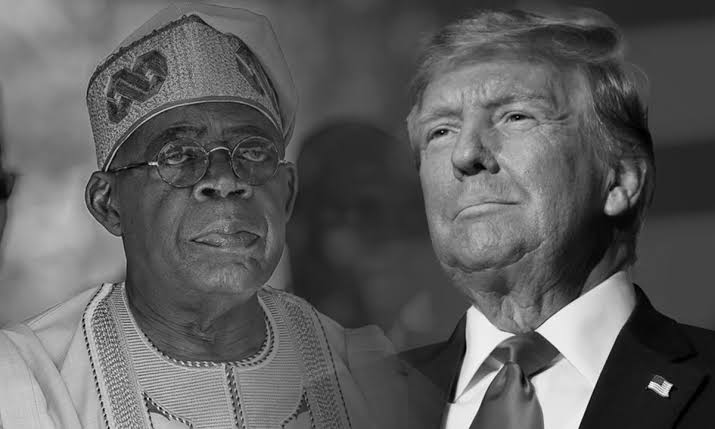
The Federal Government has opened diplomatic discussions with the United States following threats by U.S. President Donald Trump to launch military action against Nigeria over alleged attacks on Christians.
The Minister of Information and National Orientation, Mohammed Idris, disclosed this during an interview with Sky News, where he confirmed that both governments are now communicating through official diplomatic channels to ease rising tensions.
“Channels of communication have been opened. I can confirm that we are talking with them, and I think they are understanding the situation better,” Idris said.
ALSO READ:Trump can’t launch military action in Nigeria without Tinubu’s permission — Presidency
“We believe that most of the information is based on a lack of proper understanding of the diversity and complexity of the problem we have at hand.”
The minister stressed that Nigeria has not lost any territory to Boko Haram insurgents and that the ongoing counterterrorism campaign does not resemble conventional warfare.
He further alleged that proscribed separatist groups were working with lobbyists in the U.S. to spread misinformation and influence American policymakers against Nigeria.
“We are seeing a direct connection between U.S.-based lobbyists and a proscribed terrorist organisation in Nigeria. These groups have been reaching out to influential figures in the U.S. to lobby against Nigeria,” he alleged.
Idris acknowledged the long-standing partnership between Nigeria and the United States in fighting terrorism, calling for renewed cooperation rather than confrontation.
“The U.S. has helped Nigeria in the past to tackle insurgency, and we are calling on them again to work with us to achieve lasting peace,” he said.
The minister expressed concern over what he described as questionable data used to back claims of religious persecution in Nigeria, insisting that such figures “cannot stand scientific scrutiny.”
“Nigeria is a multi-faith nation where the constitution guarantees religious freedom. The conflicts we face are not based on religion but on complex social and economic factors,” Idris maintained.
He urged the international community to understand Nigeria’s unique diversity and the multifaceted nature of its security challenges.
“We share the concerns of our citizens and the global community about killings and insecurity, but what we need now is understanding, not misinformation,” he added.
Trump had on November 2 posted on his Truth Social platform, ordering the Pentagon to draft plans for a possible military strike in Nigeria. He claimed that “Christianity is facing an existential threat” in Africa’s most populous country and warned that if the Nigerian government fails to act, the U.S. response would be “fast, vicious, and sweet.”
Two weeks later, Trump reaffirmed his stance while speaking aboard Air Force One, saying he was considering “a lot of things,” including the deployment of troops or air strikes.
The statement has triggered diplomatic concern in Abuja and Washington, with the Nigerian government now seeking to clarify the situation and avoid escalation through continued dialogue.