
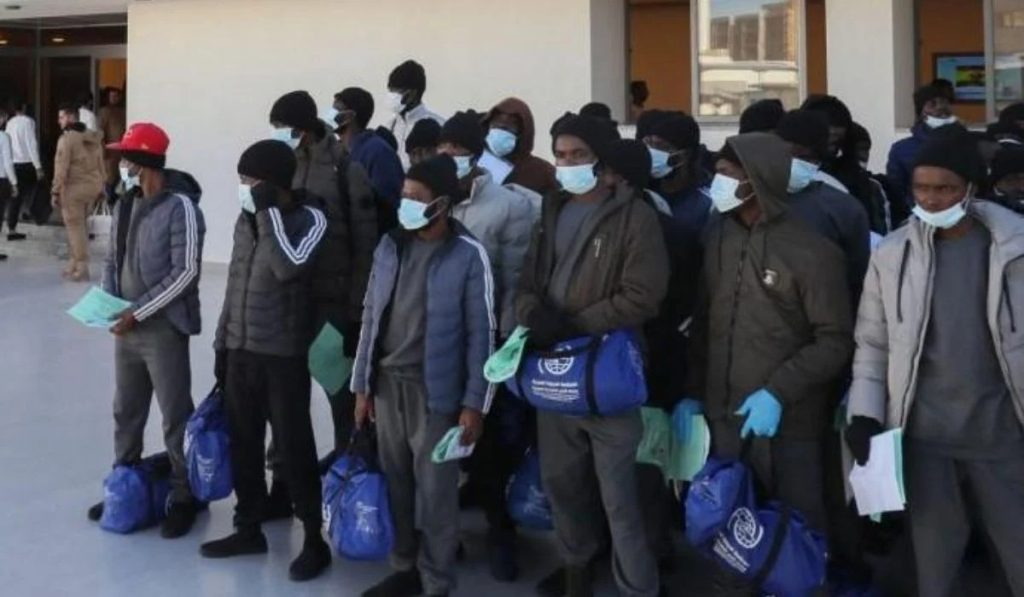
Canada deported 366 Nigerians between January and October 2025 as immigration enforcement accelerated at its fastest pace in more than a decade, according to official data.
Figures from the Canada Border Services Agency (CBSA) removals programme show that a further 974 Nigerians are currently listed as “removal in progress,” meaning they are awaiting deportation.
The latest statistics, updated on November 25, 2025, place Nigeria ninth among the top 10 nationalities deported from Canada during the period under review. Nigerians also ranked fifth among those awaiting removal.
A review of historical data shows fluctuating deportation figures over the years. In 2019, Canada removed 339 Nigerians, a number that fell to 302 in 2020, 242 in 2021, and 199 in 2022.
Nigeria did not feature among the top 10 deported nationalities in 2023 and 2024 but returned to the list in 2025, with 366 removals recorded within 10 months. This represents an eight per cent increase compared to the 2019 figure.
The deportations come amid an aggressive immigration crackdown, with the CBSA now removing nearly 400 foreign nationals weekly, the highest rate in over a decade. In the 2024–2025 fiscal year, Canada removed 18,048 people at a cost of about $78m.
Under the Immigration and Refugee Protection Act, the CBSA is legally required to remove any foreign national subject to an enforceable removal order. Individuals may be deemed inadmissible for reasons including security concerns, human or international rights violations, criminality, organized crime, health grounds, financial reasons, misrepresentation, or non-compliance with immigration rules.
About 83 per cent of those removed are failed refugee claimants whose asylum applications were denied, while criminality accounts for roughly four per cent of removals.
Canadian law provides for three types of removal orders: departure orders, which require individuals to leave within 30 days; exclusion orders, which bar re-entry for one to five years; and deportation orders, which permanently prohibit return unless special authorization is granted.
ALSO READ: ‘Sex scandals’: Chris Okafor bows to pressure, steps aside from pastoral duties
The Canadian government says it is intensifying deportations to tighten immigration targets and address housing shortages, labor market pressures, and border security concerns. It has allocated an additional $30.5m over three years to strengthen removal efforts and committed $1.3bn to border security.
President of the Canadian Association of Refugee Lawyers, Aisling Bondy, has warned that deportations could increase further if Bill C-12, also known as the ‘border bill,’ is passed.
“One of the clauses in that bill is that a lot of people will be permanently banned from filing a refugee claim in Canada,” Bondy said.
An analysis of CBSA data shows that Nigeria is the only African country among the top 10 nationalities deported in 2025. Other African countries fall under the category of “remaining nationals,” which accounted for 6,233 removals during the year.
The top 10 countries for removals in 2025 are Mexico (3,972), India (2,831), Haiti (2,012), Colombia (737), Romania (672), United States (656), Venezuela (562), China (385), Nigeria (366), and Pakistan (359).