
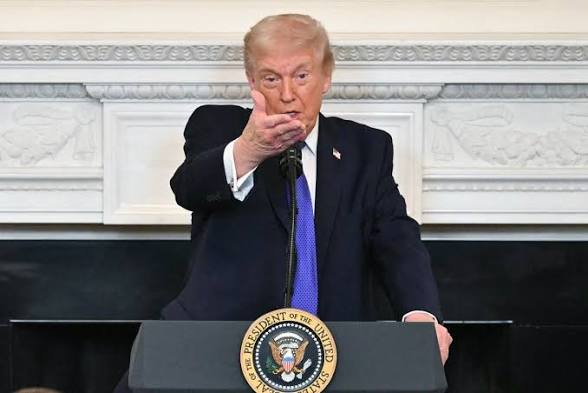
United States President Donald Trump on Thursday unveiled sweeping new trade measures, including a 100 percent tariff on certain foreign-made pharmaceutical products, in a move aimed at boosting domestic manufacturing and reshaping global supply chains.
The directive, one of two major orders signed by the president, is designed to pressure drug manufacturers to relocate production to the United States.
Under the plan, companies that fail to commit to building manufacturing facilities in the US within a specified timeframe will face the full tariff.
According to administration officials, large pharmaceutical firms have 120 days to present “reshoring” plans, while smaller companies are given up to 180 days before the steep duty takes effect.
Firms that agree to establish production plants, expected to be completed before the end of Trump’s second term, will instead face a reduced 20 percent tariff.
However, some key US allies, including the European Union, Japan, South Korea and Switzerland, are exempted from the 100 percent levy, following prior trade agreements that set their pharmaceutical tariff rate at 15 percent.
The move comes as part of a broader effort by the Trump administration to revive American industry, a policy direction first highlighted during the president’s “Liberation Day” trade announcements last year. While the administration argues that the tariffs will attract investment and create jobs, critics warn of potential disruptions to global supply chains and rising healthcare costs.
In a separate but related order, Trump also revised existing tariffs on metals, including steel, aluminium and copper. Under the new rules, finished goods containing significant amounts of these metals will be taxed at 25 percent of their total value, rather than based solely on metal content.
Officials say the change is intended to address what they describe as price manipulation by foreign producers and to ensure fairer trade practices. The revised metal tariffs are set to take effect shortly, adding to concerns about potential cost increases for manufacturers and consumers.
Despite fears over affordability, a senior US official maintained that the measures would not significantly impact retail prices, insisting the policies are necessary to protect domestic industries and strengthen the American economy.