
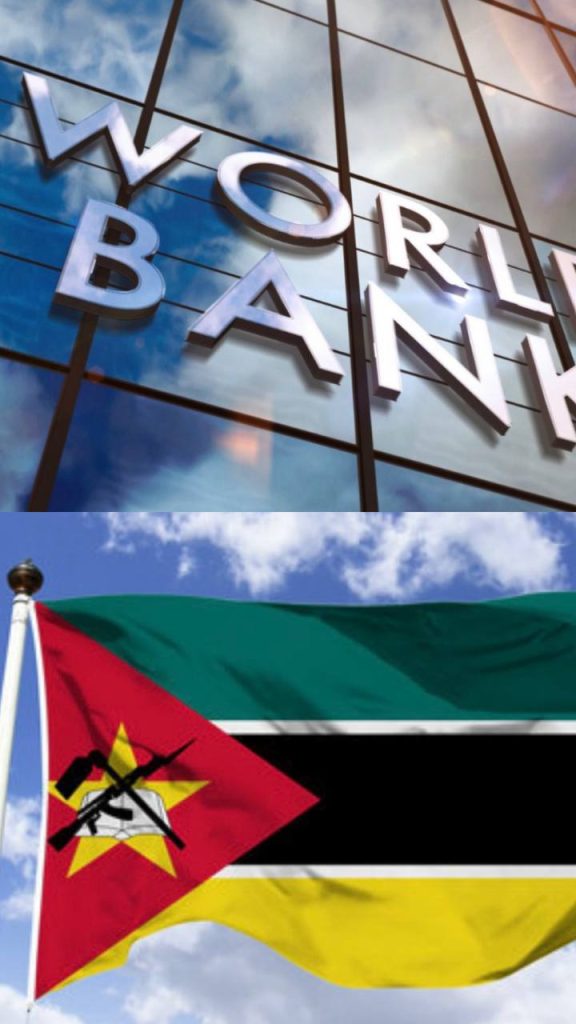
The World Bank will provide a $6 billion financing package to Mozambique over the next five years to support economic recovery and strengthen public finances.
The funding will run under a new Country Partnership Framework covering 2026 to 2031. It will focus on job creation, macroeconomic stability and growth in key sectors.
Fily Sissoko, the World Bank Group’s director for Mozambique, announced the plan after meeting President Daniel Chapo in Maputo.
“We shared with the President the main expected results of this new framework, this new partnership, which aims to unlock job creation and economic opportunities in sectors critical to Mozambique, such as energy, agribusiness and tourism,” Sissoko said.
He explained that about $3 billion is already tied to ongoing projects, while another $3 billion will be mobilised under the new framework.
ALSO READ: Gombe awards N5bn contract for street naming, signages, house numbering
“We have a balance of around US$3 billion on the bank’s side [ongoing projects], and we hope to mobilise another US$3 billion [in the new CPF], which makes a total of US$6 billion on the Bank’s side, which is very favourable. Most of this is, in fact, grants intended to support the implementation of the country’s development strategy,” he said.
Sissoko added that the Bank hopes to attract more private investment. “We also hope to mobilise an additional US$4 billion from the private sector,” he said.
According to him, President Chapo stressed the need for faster delivery. “One of his main messages was ‘execution, execution, execution’, to ensure that we accelerate the execution of this large portfolio,” Sissoko said.
The financing comes as Mozambique faces high public debt and fiscal pressure. The International Monetary Fund recently said public debt stands at about 90 per cent of gross domestic product, adding that “challenges remain considerable” despite some positive developments.
Finance Minister Carla Loveira described the package as the official launch of a new partnership aimed at restoring fiscal balance.
“This partnership framework essentially aims to ensure macro-fiscal consolidation with a view to resuming economic growth in our country, which is looking very positive in terms of growth,” Loveira said, adding that speed of implementation is now key “so that implementation is effective.”
The IMF projects economic growth of 3.5 per cent in 2026, after an estimated 2.5 per cent in 2025.