
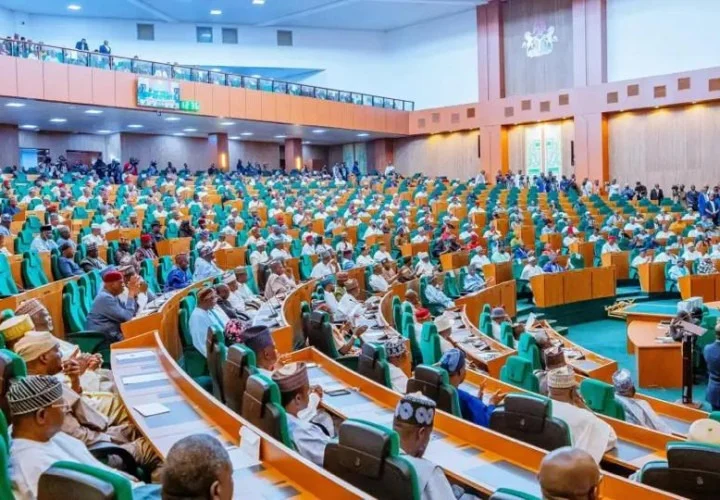
The House of Representatives Committee on Agricultural Colleges and Institutions has warned agencies under its supervision that failure to submit records of their internally generated revenue (IGR) will lead to the suspension of their 2026 budget defence.
The committee issued the directive on Tuesday during a budget defence session with the affected institutions, following the adoption of a motion by a member of the panel.
Chairman of the committee, Abiodun Akinlade, said all agencies must submit verifiable evidence of their agriculture IGR within 24 hours or risk being barred from defending their 2026 budget proposals.
He stressed that budget defence should not be treated as a routine annual exercise but as a key accountability process that directly affects national development and the welfare of citizens.
“Budget defence is a universal practice in democracies where ministries, departments and agencies present their proposals to the legislature for scrutiny and approval. Until such approval is granted, no agency is permitted to spend public funds,” Akinlade said.
He added that institutions appearing before the committee were expected to provide detailed explanations on the implementation of their 2025 budget, alongside projections and priorities in their 2026 estimates, including full disclosure of their agriculture IGR.
The committee also expressed concern over the non-release of capital funds to agricultural institutions in the 2025 fiscal year.
“The capital released to these agencies was zero throughout 2025, and this has negatively affected their performance. We appeal to the executive to ensure that capital funds are released to enable these institutions function effectively,” Akinlade said.
The lawmakers noted that the directive was part of efforts to strengthen transparency and revenue accountability among government-owned institutions, particularly those in the education and training sector.
Over the years, several agencies have appeared before National Assembly committees without presenting comprehensive IGR data, making it difficult to assess their actual funding needs and identify possible revenue leakages.
The committee observed that many agricultural institutions generate income through tuition, consultancy services, farm produce, research grants and commercial ventures, but often fail to properly document or disclose such earnings.
It said the submission of agriculture IGR records was crucial to determining the true financial standing of the institutions, improving fiscal discipline and enhancing legislative oversight ahead of the consideration of the 2026 budget.