
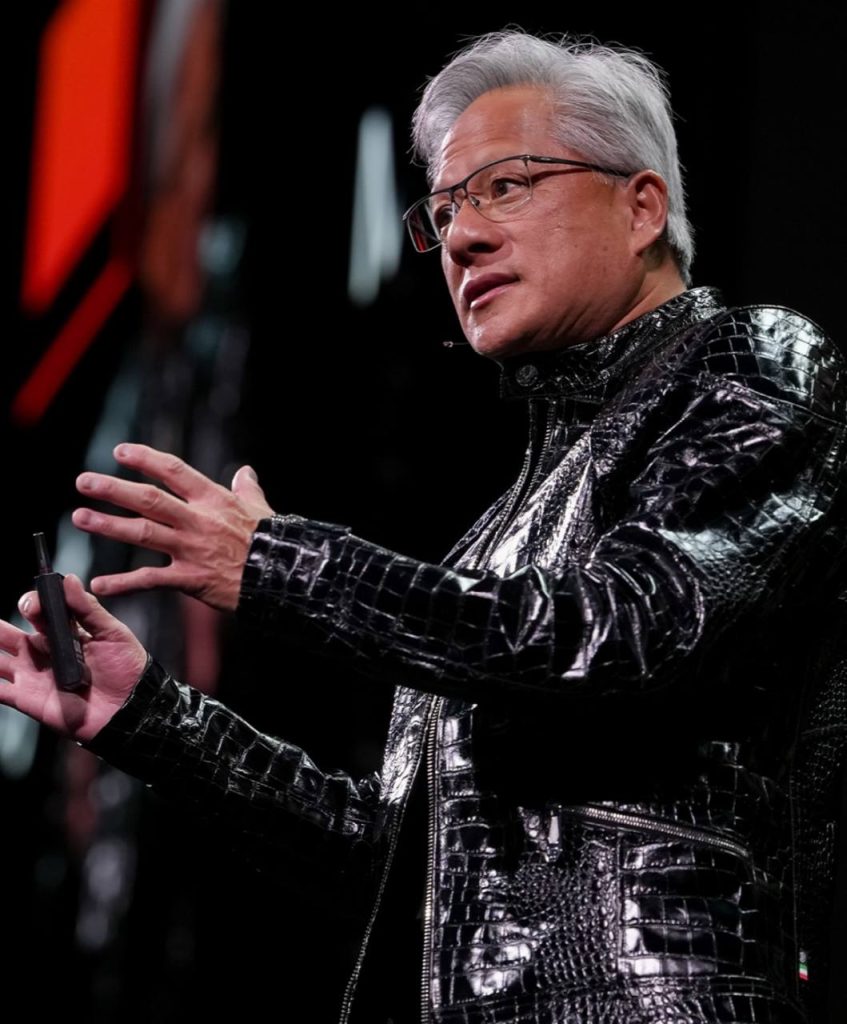
Nvidia is taking its AI ambitions beyond chips and software with the launch of Alpamayo, a new platform designed to power self-driving vehicles, marking a major step in the company’s expansion into physical AI products.
At the CES technology conference, CEO Jensen Huang described Alpamayo as giving cars “reasoning” abilities that enable them to handle complex situations safely and explain their decisions. “This allows vehicles to think through rare scenarios and navigate safely in all environments,” he said.
Nvidia is collaborating with Mercedes-Benz to deploy Alpamayo in a driverless car set to debut in the U.S. later this year, with Europe and Asia to follow. A CES demonstration showed the vehicle navigating San Francisco streets autonomously while a passenger kept their hands off the wheel. “It learns directly from human drivers and communicates what it’s about to do,” Huang explained.
ALSO READ: US approves sale of Nvidia AI chips to UAE, Saudi Arabia
The platform is open-source, with code available on Hugging Face, enabling researchers to retrain and adapt the model. Huang said the ultimate goal is a future where “every single car, every single truck, will be autonomous.”
Tesla CEO Elon Musk responded on social media, noting that while full autonomy is achievable, reaching beyond 99% reliability is “super hard to solve.”
Analyst Paolo Pescatore called Alpamayo “a profound shift for Nvidia, moving from compute provider to a platform for physical AI ecosystems,” and said it strengthens the company’s lead in AI-powered hardware.
Nvidia also announced that its Rubin AI chips are in production and expected later this year. The chips promise greater efficiency while lowering the cost of AI development.